Introduction
In a world where attackers move fast, stealthily and laterally, not seeing what’s happening on your network is one of the biggest risks. Network visibility fully understanding traffic, devices, flows, user behavior, is no longer optional. It’s what separates organizations that recover quickly from those that suffer lasting damage.

At RACE Ahead IT Solutions, Partnering with Global technology leaders such as Dell, HPE, Nutanix , our goal is to build cybersecurity frameworks that deliver not just protection, but measurable outcomes. Here’s how network visibility does that and how we can help you implement, measure and continuously improve.
What Exactly is Network Visibility?
Network visibility refers to the ability to see, inspect & understand all traffic, devices and interactions within and traversing your network. Good visibility gives you:
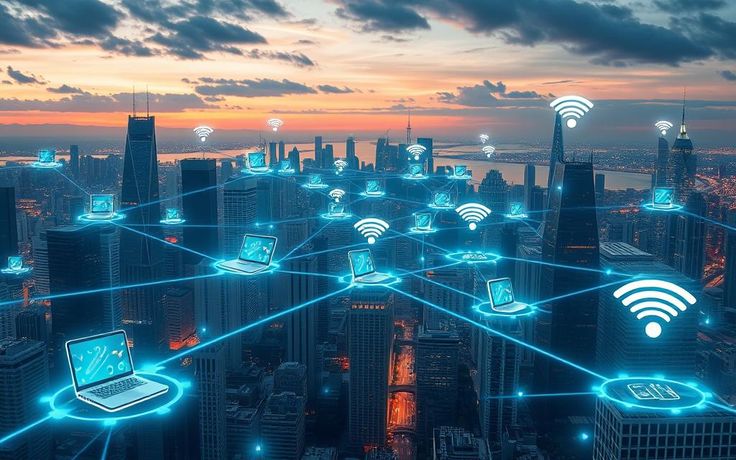
- Awareness of all connected devices (IoT, endpoints, servers).
- Real-time insight into traffic flows (east-west, north-south).
- Detection of anomalies — unusual communication patterns, suspicious DNS traffic, lateral movement.
- Historical data/logs to trace incidents and forensics.
In short, visibility is the lens through which all security controls are applied.
Why Network Visibility Is Critical for Cybersecurity?
These are the key reasons why investing in visibility is non-negotiable:
1. Early Detection of Sophisticated Threats
Advanced attackers often dwell laterally, trying to avoid triggering perimeter alarms. With deep visibility (e.g. via flows, packet inspection, behavioral baselines), you can spot deviations before damage spreads.
2. Reduced Mean Time to Detect & Respond
Limited visibility slows incident response. When you have clear logs, correlation and context, your SOC or security team can triage alerts faster and act decisively.
3. Better Context for Security Analytics & Threat Intelligence
Visibility feeds SIEMs, UEBA systems, threat intelligence platforms — enabling them to correlate events, spot patterns and suggest mitigation strategies.
4. Compliance, Auditing & Reporting
Regulations often demand traceability, logging and accountability of network activities. Visibility ensures you can meet audit requirements and provide evidence when needed.
5. Validation of Security Controls

You may deploy firewalls, microsegmentation, intrusion detection systems and more. Visibility lets you verify whether these controls are effective in practice and reveal gaps.
Key Metrics for Cybersecurity
For visibility to work, it’s not just about turning on monitoring, it’s about measuring the right things, using reporting effectively and making decisions from data. These metrics & report types you’ll want in your cybersecurity framework, especially when working with RACE Ahead IT:
Performance Indicators (KPIs) for Network Visibility in Cybersecurity
| Metric / Report | What It Measures | Benchmark (from Industry) | How RACE Ahead Helps You Achieve / Improve It |
| Mean Time to Detect (MTTD) | Time from compromise or anomaly to detection | Currently, many breaches go undetected for ~200+ days without strong visibility. | We deploy tools that feed telemetry from endpoints, network flows, logs to reduce detection time plus dashboards to see detection latency. |
| Mean Time to Contain / Respond (MTTR) | Time from detection to neutralizing the threat | In many reports, containment takes an additional 60-75 days. Bright Defense+1 | We help set up incident response plans, playbooks, and automation so that when you see threats, you can act fast. |
| Dwell Time | How long malicious presence persists before detection | As low as 5-10 days in best practice cases; otherwise much longer. Packetlabs+1 | Through real-time monitoring, anomaly detection, threat hunting capabilities, we lower dwell time. |
| Number of Incidents Blocked / Prevented vs Post-Detection Incidents | Measures how many threats are stopped before damage | Organizations with good visibility block more earlier. (Data varies by product.) | We build prevention + detection layers. For example, network segmentation + visibility helps block lateral movement and early stages. |
| Cost Savings from Breach Avoidance / Faster Containment | Dollars saved by avoiding losses, fines, downtime | For example, reduced time to resolve under 200 days saves ~$1M+ in many breach cost reports. StrongDM+1 | RACE Ahead helps you build business cases showing return on investment, using your own environment’s risk profile. |
| Security Tool Utilization | Are the tools you have being fully used (packet brokers, flow collectors, SIEM, etc.) | EMA survey: many tools are under-utilized; good visibility can increase utilization by >50%. getnetworkvisibility.com | We audit your tool stack, find blind spots, reduce redundancy, optimize configs so tools deliver maximum value |
| Executive / Risk Reporting | Reports that tie security metrics to business risk, compliance, financial exposure | Surveys show many organizations struggle to quantify litigation costs, breach frequencies because of visibility gaps. todayinbanking.com | We help set up dashboards, KPIs/KRIs, reports you can present to leadership or board. |
How RACE Ahead IT Works
To make visibility meaningful, not just visible, RACE Ahead IT’s approach includes:
1. Discovery & Baseline Reporting
When engaging with a client, we map out all assets, devices, users, cloud services, and current network flows. We generate baseline reports – what’s normal, what isn’t. This gives you a benchmark (e.g. current MTTD, MTTR, tool utilization, dwell time).
2. Tool Integration & Central Dashboards
We integrate network monitoring, flow collectors, endpoint logs and security tools so that data comes into a unified view. You get dashboards for technical teams and summary reports for leadership showing KPIs and business risk.
3. Regular Performance & Threat Reports
Periodic reports (weekly/monthly/quarterly) with metrics like detection times, number of attempted vs. prevented incidents, usage of security tools, top vulnerabilities, breaches contained, dwell times, etc.
4. Continuous Improvement / Tuning
From reports, we identify bottlenecks: maybe certain micro-segments have no monitoring, or certain application flows are blind. We tune thresholds, add sensors, or re-architect parts as needed.
5. ROI / Cost-Benefit Analyses & Risk Forecasting
We help project the cost of potential breaches (data lawsuits, regulatory fines, business downtime). We map visibility improvements against risk reduction, showing leadership the financial benefits lowered expected costs, improved compliance posture, saved time, reputational risk prevention.
Reported Metrics to Demand
When selecting your cybersecurity & network visibility partner (or evaluating your internal program), these are metrics & report-types you should insist on:
- Current vs Target MTTD & MTTR — show where you are, and what you’re aiming for.
- Dwell Time per type of threat (e.g. malware, ransomware, insider threat).
- Number of threats detected vs prevented (pre- vs post-attack metrics).
- False positive vs false negative rates for detection tools.
- Coverage gaps – e.g. % of network segments/devices/cloud services not monitored.
- Tool utilization rates — how many security tools deployed vs actively useful vs redundant.
- Incident cost estimates – both in financial terms (downtime, loss, remediation) and non-financial (brand, regulatory penalty).
- Compliance reporting – adherence to data-protection laws, industry-specific regulations, audit-ready logs.
Conclusion
Network visibility is not just seeing more, it’s seeing what matters, measuring it, acting on it and continuously improving. At RACE Ahead IT, we believe in putting measurement at the core of cybersecurity, so you don’t just say “we have visibility” you show what that visibility delivers.
If your organization is curious about:
- What your current detection times and dwell times look like,
- How much you might save by improving visibility,
- What gaps exist in your monitoring,
We are here to Race Ahead with you! Reach out for a visibility audit, metrics baseline report, or roadmap for measurable cybersecurity improvements.